
Silver has always held a special place in Indian households, whether it is bought for auspicious festivals like Dhanteras, gifted to newborns for their annaprasana, or worn as a daily style statement by modern women. For generations, buying silver was based largely on trust between the customer and the family jeweller. However, as designs evolve and more people choose to buy jewellery online, the need for a standardized guarantee of purity has become essential.
You might have heard recent discussions about BIS Hallmarking for silver becoming mandatory in various districts across India. As a consumer, this is excellent news. It means the days of guessing whether your silver anklets, rings, or necklaces are truly pure are coming to an end. The shift towards standardized hallmarking creates a transparent market where you get exactly the value you pay for.
Why Silver Standardization Matters for You
For a long time, the silver market operated with vague terms like "standard silver" or "market silver." These terms often masked the reality that the purity could vary anywhere from 60% to 80%, despite being sold as high-quality metal. This lack of regulation meant that customers often paid the price for pure silver but received an alloy mixed with high amounts of zinc, copper, or even lead.
The push for mandatory BIS (Bureau of Indian Standards) certification changes this landscape entirely. For the end consumer, this standardization offers three fundamental benefits:
- Financial Protection: You pay for the exact weight of pure silver used in the product, not for cheaper filler metals. When you buy a Nipura Silver Coin for investment, you want assurance that it is 999 pure, and hallmarking provides that.
- Skin Safety: Lower purity silver often contains nickel or lead, which can cause allergic reactions. Standardized 925 Sterling Silver is generally hypoallergenic and safe for sensitive skin.
- Resale Value: When you possess a hallmarked item, its purity is documented. If you ever decide to exchange or sell it, the value is determined by an official standard, not a jeweller’s visual estimate.
Decoding the Hallmarks: What to Look For
When you pick up a piece of silver jewellery today, you should look for specific marks that guarantee its quality. Under the new HUID (Hallmark Unique Identification) system, the marking process has been simplified to make it easier for customers to verify.
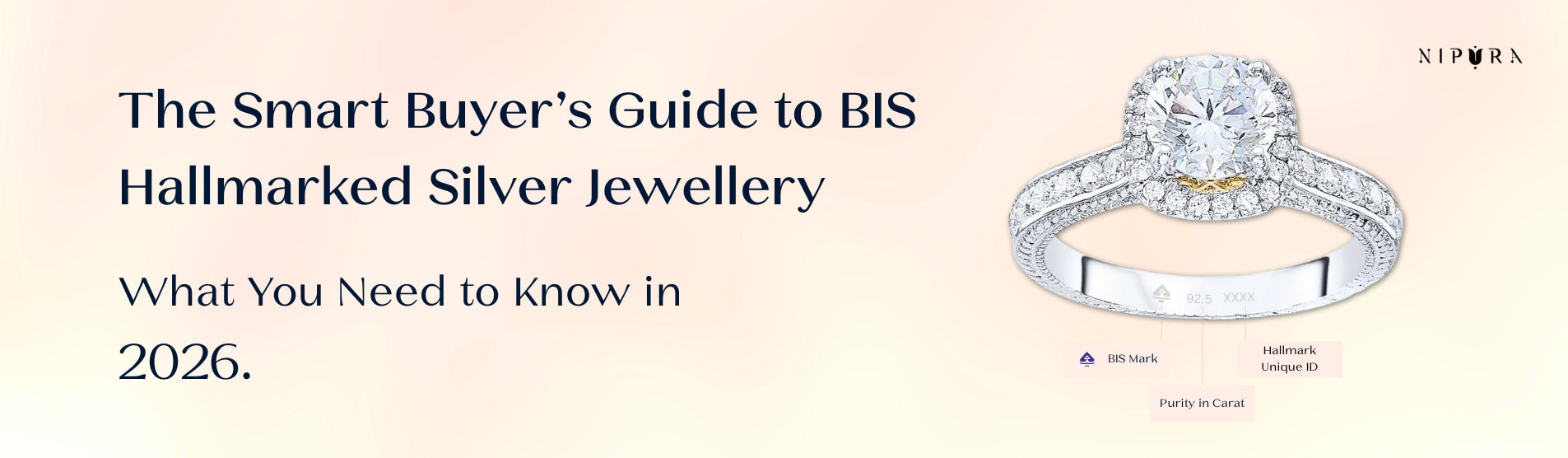
There are three distinct marks you need to identify on your jewellery:
- The BIS Logo: This is the official triangular mark of the Bureau of Indian Standards. It indicates that the purity of the jewellery has been checked at a BIS-recognized Assaying and Hallmarking Centre.
- The Purity Grade: This indicates the fineness of the silver. For most high-quality fashion jewellery, like a Nipura Necklace, you will see "925". This means the metal is 92.5% pure silver.
- The HUID Code: This is a six-digit alphanumeric code (a mix of letters and numbers, e.g., AB1234). This code is unique to that specific piece of jewellery. It is essentially the digital identity of your ring, earring, or bracelet.
Understanding Silver Purity Grades
Not all silver is the same. The BIS hallmark for silver recognizes different grades of silver for different purposes. As a buyer, it is crucial to know which grade is suitable for which type of product. Using the wrong grade for the wrong purpose can result in damage; for example, pure silver is too soft for intricate necklace clasps or daily wear rings.
Here is a simple breakdown of the recognized grades you will encounter in the market:
Table: Silver Purity Grades and Their Uses
|
Purity Grade |
Fineness (Parts per Thousand) |
Best Suited For |
Consumer Note |
|
Fine Silver |
999 |
Investment bars, Silver Coins |
Too soft for jewellery; bends easily. Best for pooja or investment. |
|
Standard Silver |
990 |
Pooja utensils, silverware |
Good for items that are not worn daily but need high purity. |
|
Sterling Silver |
925 |
Daily wear jewellery, Necklaces, Rings |
The global standard for durable, high-quality fashion jewellery. |
|
Silver Alloy |
835 / 800 |
Large utensils, structural decor |
Lower purity, often used for items that need to be very rigid. |
Most reputable modern brands, including Nipura, focus strictly on 925 Sterling Silver for wearable jewellery. This is because the addition of 7.5% strengthening alloys (usually copper) makes the metal durable enough to hold gemstones and withstand daily wear without bending, all while maintaining the brilliant shine of silver. Conversely, for the Investment Collection, brands utilize 999 Pure Silver for items like coins and bars intended for wealth preservation.
The HUID Code: Your Digital Guarantee
The HUID (Hallmark Unique Identification) code is the most significant update for consumers. Previously, hallmarking only proved that a batch of jewellery was tested. The HUID goes a step further; it traces the individual piece. This prevents the duplication of stamps on untested jewellery.
How to Verify HUID Using Your Smartphone
You do not need to be an expert to check if your jewellery is genuine. The BIS has made this accessible through a mobile app. Here is a step-by-step checklist for verifying your purchase:
- Step 1: Download the "BIS Care App" from the Google Play Store or Apple App Store.
- Step 2: Open the app and select the "Verify HUID" option.
- Step 3: Look at your jewellery through a magnifying glass (most jewellers will provide one) to read the tiny 6-digit alphanumeric code laser-engraved on the piece.
- Step 4: Type this code into the app.
- Step 5: The app will display the details of the piece, including the jeweller who got it hallmarked, the purity, and the date of testing.
If the details on the app match the item in your hand, for example, if the app says "Silver Ring" and you are holding a ring you can be assured of its authenticity.
Jewellery Weight and Hallmarking Exemptions in 2026
While the government is pushing for mandatory hallmarking, there are practical exemptions that you should be aware of as a buyer. Currently, certain categories may be exempt from mandatory physical marking, particularly items that are very lightweight (often under 2 grams).
The physical act of laser engraving a tiny stud earring, a delicate nose pin, or a fine chain extension can sometimes damage the design or structure of the piece. However, just because an item is small does not mean you should accept lower quality.
Trustworthy brands will still manufacture these small items using the same 925 Sterling Silver used in their larger pieces. When buying small items like Nipura’s Solitaire Studs where a hallmark might not be visible due to size constraints:
- Ask for an Authentication Certificate: This document acts as a guarantee from the brand regarding the metal purity.
- Ensure the brand has a clear return policy: This indicates confidence in their product quality.
- Check the Description: Ensure the brand specifies "925 Sterling Silver" explicitly in the product description, rather than vague terms like "silver tone."
Buying Silver Online: A Checklist for Safety
Buying online offers convenience and a wider variety of designs, but it requires a savvy eye. Since you cannot physically inspect the hallmark or HUID code before delivery, you must rely on the brand's transparency and reputation.
Use this checklist before clicking "Buy Now":
- Clear Material Description: Does the site explicitly state "925 Sterling Silver"? Avoid sites that just say "Silver tone," "Silver look," or "German Silver" (which actually contains no silver at all).
- Certification: Does the brand promise an Authentication Certificate included with the delivery? This is standard practice in Nipura.
- Return Policy: A confident brand offers a fair return window. For instance, Nipura offers a return policy (typically 7 to 15 days), allowing you to inspect the jewellery in person and return it if you are unsatisfied.
- Care Instructions: Does the brand educate you on how to maintain the plating? High-quality brands provide care guides because they want your jewellery to last.
Caring for Your Verified Silver
Once you have purchased high-quality, verified silver, maintaining it ensures it lasts a lifetime. Even the purest silver naturally reacts with moisture and sulfur in the air; this is a chemical process called oxidation or tarnishing. However, with good habits, your jewellery will stay shiny.
- Storage is Key: Always store your silver in the Ziploc bag or airtight box provided by the brand. This isolates the metal from humidity.
- The "Last On, First Off" Rule: Your jewellery should be the last thing you put on (after lotions, perfumes, and hairspray) and the first thing you take off when you get home.
- Avoid Chemicals: Keep silver away from perfumes and cleaning sprays. These can damage the plating, especially on Rose Gold or Gold-plated silver items.
- Gentle Cleaning: If your silver gets dull, wipe it gently with a soft cotton cloth. Avoid harsh scrubbing pads which can scratch the smooth finish.
Conclusion: Empowered Buying
The transition to mandatory hallmarking and the HUID system is a significant win for consumers. It removes the guesswork and places the power of verification in your hands. You no longer have to rely on blind faith; you have science and regulation backing your purchase.
By choosing brands that adhere to these high standards offering 925 Sterling Silver, transparent policies, and authentication certificates you are building a jewellery collection that is valuable, safe, and timeless. Whether it is a Silver Coin for a festival or a chic Nipura Necklace for your office wear, always insist on purity.
Explore BIS hallmarked 925 sterling silver’s by Nipura, crafted with certified purity and long-term value in mind.